Can You Lose Weight Without GLP-1s? | Inspiring WithInn
Can You Lose Weight Without GLP-1s? What to Do Instead
Ozempic quickly went from a hush-hush celebrity trend to a household name dominating the weight loss conversation. Now, everyone seems to be on GLP-1s. And, let’s be honest, they’re getting pretty incredible results. People who’ve been trying to slim down for years are suddenly shedding pounds in months and not even feeling hungry between meals. It sounds too good to be true, and it may have you wondering if the only way for you to reach your weight loss goals is to jump on the GLP-1 train too.
While there are a lot of factors that come into play, it is totally possible for most people to lose weight without Ozempic, Wegovy, or another GLP-1 medication. Of course, you should always talk to your doctor about the best options for you. But, in this post, I want to walk you through exactly how to lose weight naturally and address why you may not have had success in the past.
Here’s what you need to know:
Do You Really Need a GLP-1 to Lose Weight?
For most people, no, you don’t need it. That said, I won’t lie to you. In many ways, GLP-1s can make things easier! A weekly injection can quiet your appetite and make weight loss feel like something that happens passively, rather than something you have to actively manage all day long. But it’s not a miracle cure. GLP-1s don’t necessarily address the underlying metabolic issues that can make weight loss difficult, and they can come with some unpleasant side effects. Plus, most people don’t want to be married to a prescription drug for the rest of their lives if they can help it.
If you’re concerned about the short- or long-term effects of Ozempic or Wegovy, you can’t take the medication because of another condition, or you simply want to improve your health rather than rely on medication alone, this guide is for you! As a certified health coach, it’s my mission to help people reach their goals in a way that fits their values, priorities, lifestyle, and vision for their long-term health.
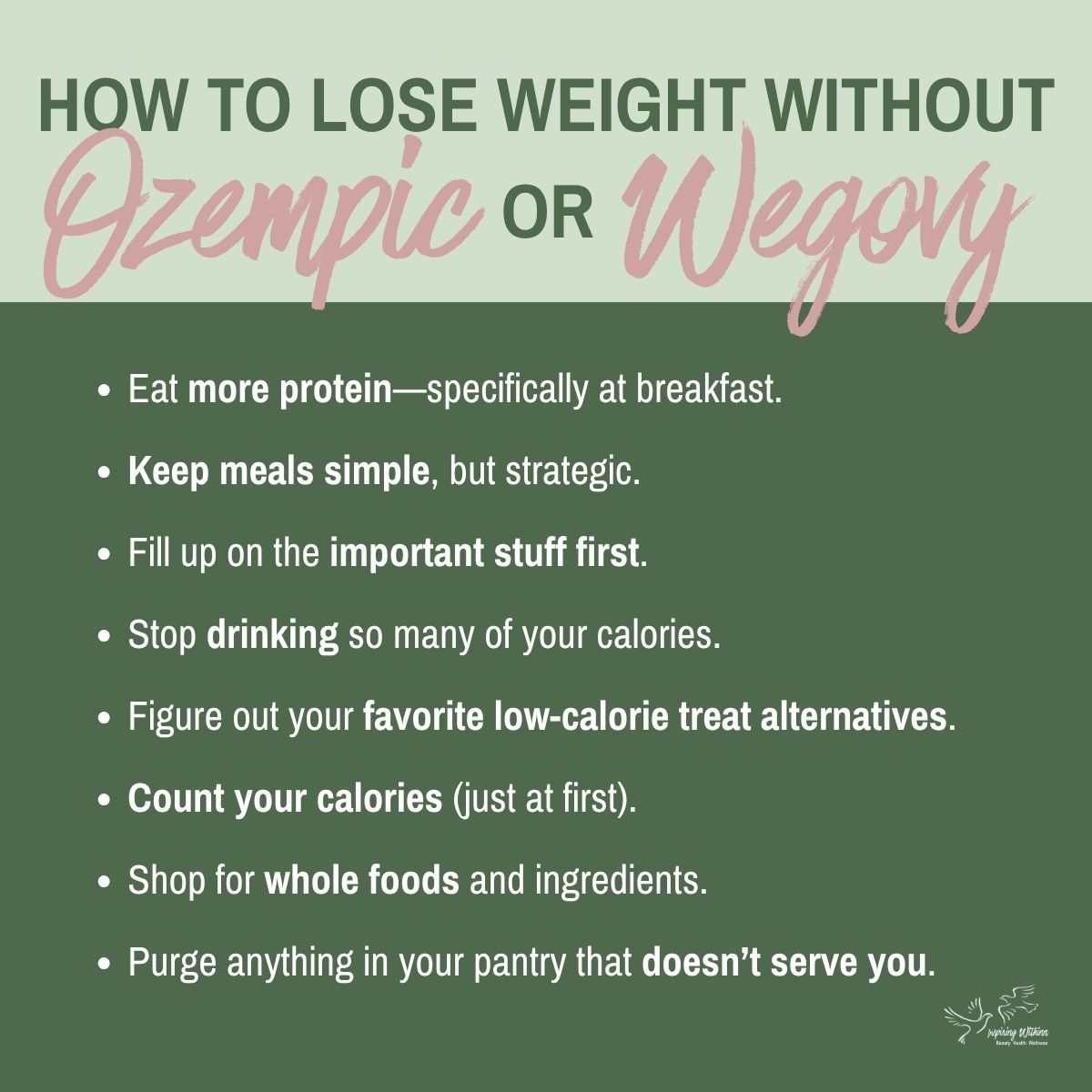
How to Lose Weight Without Ozempic or Wegovy
Eat more protein—specifically at breakfast.
When we hear people talk about eating protein, you may assume it’s all about strength training or bulking up. But protein isn’t just for building muscle (though that’s a great health goal, too!). It can actually be a powerful tool for weight loss. Protein helps keep you fuller longer, takes more energy to digest than carbs or fat, helps preserve muscle while you lose weight, and may even reduce cravings. All of that can make losing weight a whole lot easier!
Aim to make protein a major part of every meal, but pay particular attention to breakfast. Research suggests that starting your day with a higher-protein meal may actually influence how much you eat later in the day. So, rather than saving most of your protein for lunch or dinner, try getting around 20–30 grams first thing in the morning.
If getting enough protein feels difficult, don’t overcomplicate it. Here are some of the easiest protein options:
Easy High-Protein Foods for Weight Loss
You don’t need expensive specialty foods to eat more protein. Here are some easy options to keep on hand. Protein amounts vary by brand and preparation.
Eggs & Dairy
Eggs, 2 large: 12–13g protein | $
Greek yogurt, 1 cup: 20–25g | $$
Cottage cheese, 1 cup: 24–28g | $$
High-protein milk, 1 cup: 12–14g | $$
String cheese, 1 stick: 6–7g | $
Meat & Poultry
Chicken breast, 3 oz cooked: 25–27g | $$
Chicken thighs, 3 oz cooked: 20–22g | $$
Rotisserie chicken, 3 oz: 22–25g | $$
Ground turkey, 3 oz cooked: 21–23g | $$
Lean ground beef, 3 oz cooked: 21–23g | $
Pork loin, 3 oz cooked: 22–24g | $$
Deli turkey, 3 oz: 15–18g | $$
Chicken or turkey sausage, 1 serving: 12–15g | $$
Frozen meatballs, 3 oz: 14–18g | $$
Beef or turkey jerky, 1 oz: 9–12g | $$$
Seafood
Canned tuna, 1 can: 25–30g | $
Salmon, 3 oz cooked: 20–22g | $$$
Shrimp, 3 oz cooked: ~20g | $$$
White fish, 3 oz cooked: 20–22g | $
Plant-Based Protein
Lentils, 1 cup cooked: ~18g | $
Black beans, 1 cup cooked: ~15g | $
Chickpeas, 1 cup cooked: 14–15g | $
Edamame, 1 cup cooked: 17–18g | $$
Tofu, ½ cup: 10–20g | $
Tempeh, ½ cup: 15–17g | $$
Quick & Convenient
Protein powder, 1 scoop: 20–25g | $$
Ready-to-drink protein shake, 1 bottle: 20–30g | $$$
Protein bar, 1 bar: 15–20g | $$$
$ = generally budget-friendly | $$ = moderate | $$$ = pricier
Keep meals simple, but strategic.
I think it’s safe to say we all get a little overwhelmed by healthy cookbooks and nutrition-based content creators out there. They’re well-meaning, but their recipes can sometimes feel overwhelming and impractical. With 20+ steps, mile-long ingredient lists, and obscure additions (what the heck are sprouted buckwheat groats?), they can make you feel like eating healthy means relearning how to cook.
But don’t stress. Start by deciding what your go-to protein sources are. Maybe you love eggs, chicken breast, and a good steak. Those are all great options! Choose one and pair it with your favorite vegetables. Mix and match, add seasonings or sauces you enjoy, and switch things up when you get bored. It really can be that simple.
Protein + vegetables = a simple, nutrient-dense meal.
Of course, that doesn’t mean carbohydrates or healthy fats are bad or that every meal needs to follow this exact formula. The point is that you don’t need complicated recipes or specialty ingredients to eat well. Start with a solid foundation, then build from there.
Fill up on the important stuff first.
No matter what’s on your plate, try eating your protein and vegetables first, then move on to the rest of your meal. This lets you start with the foods that tend to be the most filling and nutrient-dense, so you’re less likely to overdo it on the higher-calorie foods you still want to enjoy. You don’t have to cut out carbs, dessert, or your favorite foods. You’re simply being a little more strategic about when you eat them!
P.S. This same tip works for snacks! If you want some chips or a slice of cake, that’s fine. But consider eating something protein-rich first. You may find that you’re satisfied with a handful of chips instead of the whole bag or one slice of cake instead of immediately reaching for another!
Stop drinking so many of your calories.
Ladies, we need to talk about you and your coffees. I get it. It’s not just about the beverage. The ritual is part of your routine! It helps you feel focused, energized, and a little pampered, too. (You deserve that!)
But many of you are drinking way more calories than you realize, and your body doesn’t respond to liquid calories quite the same way it does to calories from solid food. Drinks tend to be less filling, which means you can down a 300+ calorie coffee and still be ready for breakfast or a snack soon after. (Yes, your Pumpkin Spice Latte, White Chocolate Mocha, and Caramel Frappuccino can all clock in at around 400 calories!)
So, what can you do? Here are a list of tips:
Tips for Cutting Liquid Calories Without Giving Up Your Favorite Drinks
Compare your favorite drinks. Make a list of your go-to orders, look up the calories in each, and choose the lower-calorie options more often.
Try something new. If none of your favorites are lower in calories, branch out! (If you’re a Starbucks fan, try a Mango Dragonfruit Refresher or Pink Drink).
Order a smaller size. Go from a venti to a grande or tall to cut calories without changing the drink itself.
Ask for fewer pumps of syrup. Try half the standard amount to cut back on sugar and calories while keeping the flavor you love.
Skip the whipped cream. Leave it off to cut some extra calories without changing the drink too much.
Go lighter on drizzles and toppings. Ask for less caramel drizzle, cold foam, cookie crumbles, or other calorie-dense extras.
Choose a lower-calorie milk. Swap the standard milk for a lower-calorie option when it makes sense for your drink.
Order it “half sweet.” Ask for half the usual sweetener to cut back on added sugar and calories without giving up your favorite drink entirely.
Find a zero-calorie alternative you actually like. Zero-sugar sodas, flavored sparkling waters, and other low- or no-calorie drinks can satisfy your craving for something sweet without using up a big chunk of your daily calories.
Figure out your favorite low-calorie treat alternatives.
Losing weight doesn’t mean you can never have dessert, chips, or your favorite comfort foods again. I’d actually say that if your plan requires you to swear off everything you love forever, you probably won’t stick with it very long!
Instead, figure out which lower-calorie alternatives actually satisfy you. Maybe you love ice cream, but a Greek yogurt bar scratches the same itch. Maybe you’re a volume snacker and would rather have a giant bowl of popcorn than a small handful of chips. Or, maybe brownies are your weakness, so you experiment with a few lower-calorie recipes until you find one you genuinely love.
The goal isn’t to find the “healthiest” possible replacement. It’s to find swaps you genuinely enjoy that help you eat fewer calories without constantly feeling deprived.
Count your calories (just at first).
I know, I know. Nobody wants to count calories for the rest of their life, and I’m not asking you to! But if you’ve never paid much attention to calories before, tracking what you eat for a short period of time can be super eye-opening.
Like, did you know an avocado, though super nutrient-dense can be up to 300 calories? Of course, don’t take them off the menu, but maybe not three a day. And that generous pour of olive oil you add to your pan? A couple tablespoons can easily add another 200+ calories to your meal. Again, olive oil isn’t bad! You just want to know what you’re actually consuming. On the other hand, your favorite fudge bars are maybe only 50 calories—much lower than you thought and easy to keep in your diet!
Try tracking your normal diet for a week or two without dramatically changing anything. Pay attention to serving sizes, read nutrition labels, and learn where most of your calories are actually coming from. Then, use that information to make strategic changes. The point isn’t to obsess over every calorie forever. It’s to understand what you’re eating well enough that eventually, you don’t have to count.
Shop for whole foods and ingredients.
Here’s one of the easiest ways to make healthier choices at home: fill your grocery cart with foods you actually have to put together rather than foods that are already put together for you. These foods tend to give you more protein, fiber, vitamins, and minerals for your calories, while also being more filling. Plus, when you’re the one putting the meal together, you have much more control over how much oil, sugar, sauces, and other calorie-dense extras go into it.
Think eggs, meat, fish, fruits, vegetables, potatoes, rice, beans, Greek yogurt, cottage cheese, oats, and other basic ingredients. You definitely don’t need to avoid packaged foods altogether. (And technically, plenty of perfectly nutritious foods come in packages!) The goal is just to make whole and minimally processed foods the foundation of what you eat.
Purge anything in your pantry that doesn’t serve you.
You may be super motivated right now . . . but that will fade. You need to plan for your weak moments more than your strong ones! Before you get started (or restart after falling off), purge your pantry of anything that you know won’t serve your health goals.
That doesn’t mean tossing every treat! Focus on the foods you struggle to eat in moderation. Maybe individually wrapped chocolates are fine, but a family-size bag of chips disappears in two days. Buy smaller portions, keep fewer temptations around, or don’t keep your biggest weaknesses in the house at all. If you really want that candy bar, you can always drive to the gas station and get one! (Every once in a while.)
Just don’t leave yourself with nothing convenient to eat. Stock easy snacks you actually enjoy, like fruit, Greek yogurt, popcorn, jerky, or string cheese. The goal isn’t to remove temptation entirely. It’s to make the choices that support your goals easier.
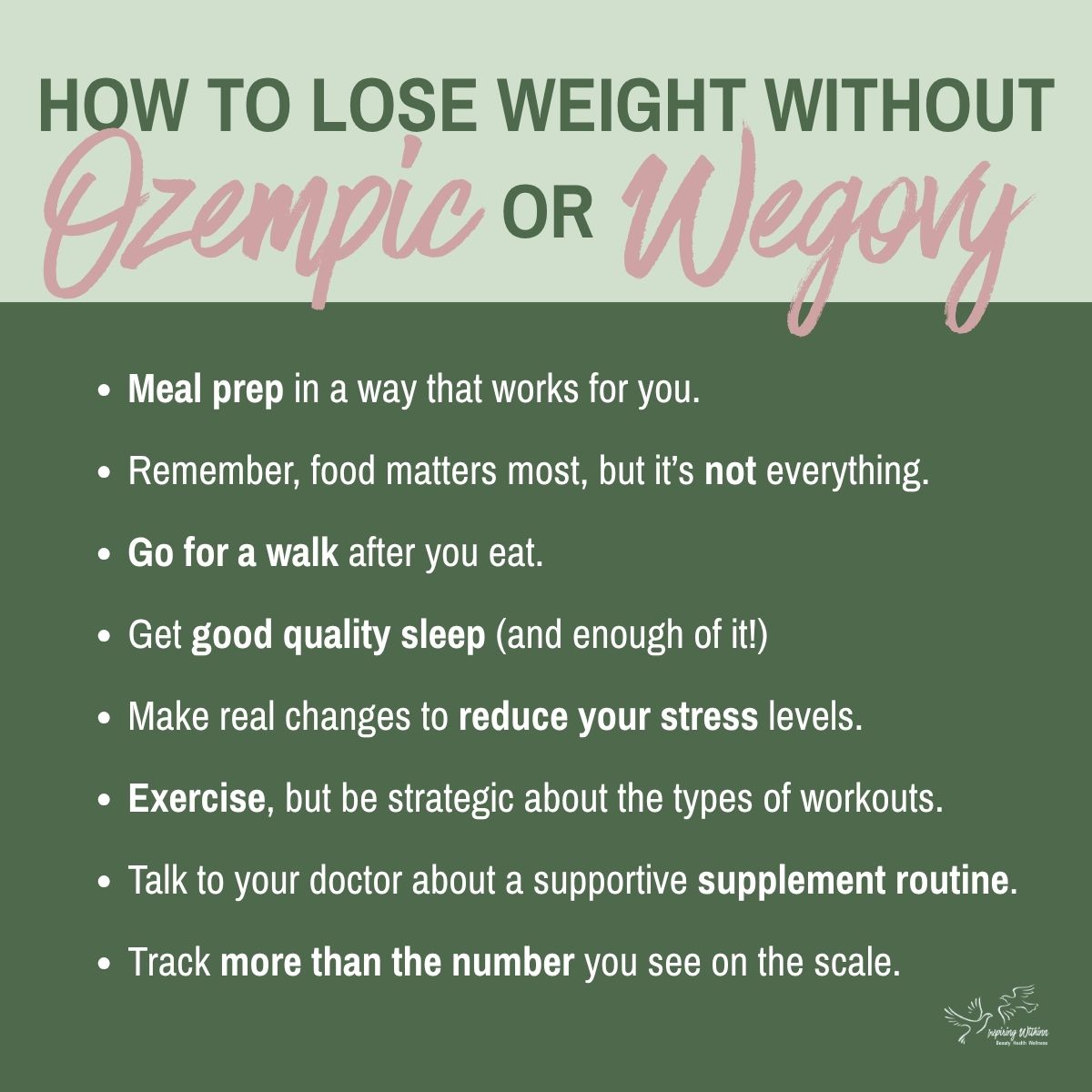
Meal prep in a way that works for you.
People often talk about meal prepping whenever the topic of eating healthy comes up—and rightfully so! Again, the key to sticking with your plans mostly has to do with preparing for the moments when you’re least motivated or feel the most rushed. Meal prepping keeps you from ordering out at work, grabbing a frozen pizza on a busy week night, [one more thing.]
But there’s more than one way to meal prep. Find a flow that works for you! Here are a few different ways to meal prep:
Simple Meal Prep Ideas for Busy Weeks
Batch-prep complete meals once a week. Set aside a few hours to cook several full meals, portion them into containers, and store them in the fridge or freezer for the week ahead.
Prep ingredients instead of meals. Wash and chop vegetables, cook proteins and grains, portion snacks, and prep sauces ahead of time. Everything is ready to mix and match when it’s time to cook.
Cook once, eat twice (or three times!). Whenever you make dinner, intentionally cook extra. Have leftovers for lunch the next day and freeze another portion for a future meal.
Use component-based meal prep. Keep a few ready-to-go proteins, vegetables, carbs, and sauces on hand, then combine them differently throughout the week so you aren't eating the exact same meal every day.
Take advantage of convenience foods. Rotisserie chicken, frozen vegetables, microwaveable rice, pre-cut produce, salad kits, and other shortcuts absolutely count as meal prep if they make healthy meals easier.
Use a meal delivery service. If you have room in your budget but not your schedule, prepared meals or meal kits can take some or all of the work off your plate.
Want some help? Take my Nourish Your Temple course. It includes a complete grocery list, a simple prep day plan, and five quick healthy meals for you to come back to week after week!
Remember, food matters most, but it’s not everything.
When it comes to weight loss, what and how much you eat is going to make a big difference. But that doesn’t mean you should ignore everything else happening in your body! Your movement, sleep, stress levels, exercise routine, and other daily habits can all make it easier (or harder!) to stay consistent with your goals.
So, don’t put all your energy into perfecting your diet. Take a look at your lifestyle as a whole and start making small changes there, too.
Go for a walk after you eat.
One of the simplest habits you can add to your day? Take a walk after your meals! You don’t need to change into workout clothes, hit a certain number of steps, or turn it into a full-blown exercise session. Even a short 10–15 minute walk counts.
Post-meal walks are particularly great because research suggests they can help reduce the blood sugar spike that happens after eating. Plus, you’re getting some extra movement into your day without having to carve out another hour for the gym. Try walking around the block after dinner, taking a lap around the office after lunch, or even pacing around the house while you clean up.
Get good quality sleep (and enough of it!)
If you’re doing everything “right” during the day but only sleeping five hours a night, it’s time to make sleep part of your health plan. Lack of sleep can affect the hormones involved in hunger and appetite, making you feel hungrier and potentially increasing cravings for higher-calorie foods.
Aim for 7–9 hours of quality sleep each night. And remember, quality matters too! Create a bedtime routine, keep your bedroom cool and dark, put the phone away, and try to go to bed and wake up around the same time each day. Weight loss doesn’t only happen while you’re awake!
Make real changes to reduce your stress levels.
“Reduce your stress” is one of those health tips that sounds great until you actually have to figure out how to do it. But when you’re trying to lose weight, it really does matter. Chronic stress can affect hormones involved in appetite and metabolism, increase cravings for high-calorie foods, disrupt your sleep, and make it a whole lot harder to stick with the healthy habits you’re trying to build.
And unfortunately, a bubble bath isn’t going to fix an overloaded schedule, a toxic relationship, financial problems, or a job that has you constantly on edge.
So, look beyond temporary stress relief and ask yourself what’s actually causing your chronic stress. Maybe you need stronger boundaries. Maybe you need to say no more often, ask for help, change your schedule, have a difficult conversation, or remove something from your plate entirely. You can’t eliminate every stressful part of life, but you can stop accepting unnecessary stress as normal.
Not sure where to start? That’s exactly why I created The WithInn Method. Instead of jumping straight to diet and exercise, it helps you look at the whole picture—spirit, mind, and body—so you can identify what actually needs your attention and start making changes at the root.
Exercise, but be strategic about the types of workouts.
If you’re already running on stress all day long, your workout probably doesn’t need to leave you completely wrecked, too. We already talked about how chronic stress can make weight loss more difficult, and intense exercise is another form of stress on the body. If you’ve been doing boot camps, HIIT classes, or other super-intense workouts and aren’t seeing the progress you expected, you’re not alone. High-intensity exercise temporarily increases stress hormones like cortisol and adrenaline, which may be one more thing your already-stressed body has to recover from.
Instead, try opting for gentler, slow-weighted workouts that build strength but don’t overload your stress levels. Walking, Pilates, yoga, swimming, and controlled strength training can all help you stay active, build muscle, and support weight loss without pushing your body through another high-intensity stressor. You’ll probably see better weight loss results!
Talk to your doctor about a supportive supplement routine.
Supplements aren’t a replacement for nutritious food, movement, sleep, or any of the other habits on this list. But depending on your individual health and goals, they can give your body a little extra support along the way!
A few options to talk to your doctor about include:
Berberine: May help support healthy blood sugar levels and insulin sensitivity.
Inositol: Can support insulin sensitivity, hormone balance, and metabolic health.
Protein powder: Makes it easier to hit your daily protein goals, stay fuller longer, and maintain muscle while losing weight.
Omega-3s: Support heart health and overall metabolic health.
Peptides: Certain peptide-based supplements may support things like metabolism, muscle recovery, body composition, or healthy aging, depending on the specific peptides and formulation.
Talk to your doctor about which supplements might make sense for your body, goals, and overall health. They can also help you consider things like deficiencies, medications, and potential interactions so you can build a routine that’s actually supportive for you.
Track more than the number you see on the scale.
Of course you want to see the number on the scale go down. But your weight can fluctuate from day to day for all kinds of reasons, and it doesn’t always tell the full story of the progress you’re making.
Pay attention to other wins, too. Are your clothes fitting differently? Are you getting stronger? Do you have more energy? Are you sleeping better? Can you walk farther without getting tired? Are your cravings easier to manage? Take progress photos, measurements, or keep a simple journal of how you feel.
The scale is one useful piece of information, but don’t let one number decide whether all your hard work is “working.”
Can You Increase GLP-1s Naturally?
Yes! Your body already produces GLP-1 naturally, releasing it after you eat to help regulate blood sugar, slow digestion, and signal fullness. And what you eat may actually help stimulate that natural response! Protein, fiber, and healthy fats have all been shown to encourage GLP-1 release. Some studies also show supplements may support GLP-1 activity, too!
And it’s not just about what you eat. Research suggests that exercise may influence GLP-1 levels as well. Of course, natural approaches won't mimic the powerful effects of a prescription GLP-1 medication. But they can help support the same natural systems your body already uses to regulate appetite and metabolism.
GLP-1 Medications vs. Lifestyle Changes: What’s the Difference?
The biggest difference is the strength and consistency of the effect. Medications like Ozempic and Wegovy are designed to mimic GLP-1 and stay active in your body much longer than the hormone your body naturally produces. That’s why they can have such a huge effect on appetite, fullness, and weight loss.
Lifestyle changes work differently. They may not suppress your appetite in the same powerful way, but they can actually change the habits and health factors that made losing weight difficult in the first place. Eating well, exercising, building muscle, sleeping enough, and managing stress can improve things like insulin sensitivity, blood sugar, fitness, and overall metabolic health. And unlike a medication that only works while you’re taking it, the healthy habits you build are yours to keep!
There are also the practical benefits. Healthy food, daily walks, better sleep, and other lifestyle changes don’t come with a prescription price tag. And though changing your habits definitely isn’t always easy, you also don’t have to worry about medication side effects like nausea, vomiting, diarrhea, or constipation.
GLP-1s may be an effective tool, but they aren’t the only path to weight loss, and they certainly aren’t a replacement for building a healthier lifestyle. If you’re ready to make real changes to how you eat, move, sleep, and care for your body, you can absolutely lose weight without a prescription. It may require more intention, but what you gain goes far beyond a smaller number on the scale.
The best weight-loss strategy is one you can maintain.
At the end of the day, losing weight isn’t about finding the fastest shortcut. It’s about creating a way of living that gets you to your goals and keeps you there. You don’t need to overhaul your entire life tomorrow, either. Start with more protein at breakfast. Take the walk after dinner. Prep your lunches. Get to bed a little earlier. Small choices add up, and eventually, they stop feeling like a “weight-loss plan” and simply become how you live.
And if you’re reading all of this thinking, Okay, but I need someone to help me actually do it, that’s where I come in! Through my faith-centered health coaching, I’ll help you look at the whole picture, identify what’s been keeping you stuck, and create realistic changes for your nutrition, movement, stress, mindset, and overall wellness. You don’t need another quick fix. You need a plan built for your life and support as you put it into practice.
